Ember
Ember locks daily AI market calls before outcomes are known, revealing high-conviction signals when its predictions diverge from real-money crowds.
Visit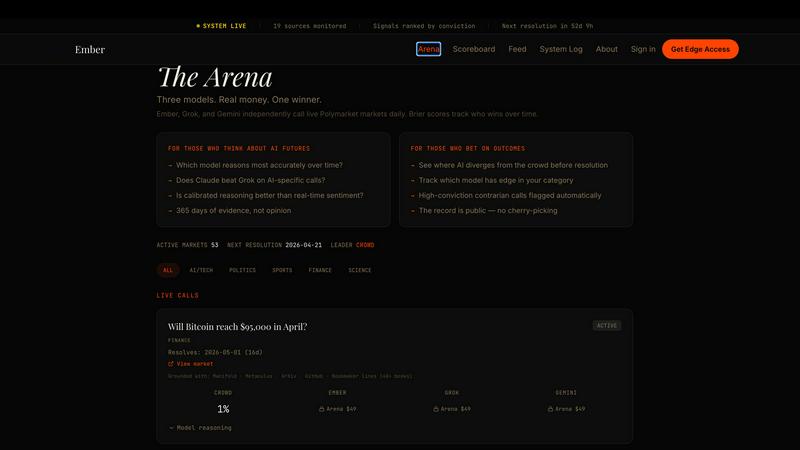
About Ember
Ember is a public AI prediction engine built on a foundational principle of transparency: an AI that will not show its work is not worth trusting. Designed for traders, analysts, researchers, and anyone seeking an edge in prediction markets, Ember operates a daily ritual at 7:00 AM EST. Each morning, three genuinely distinct AI models, Claude by Anthropic, Grok by xAI, and Gemini by Google, independently call live Polymarket markets before they resolve. These models do not consult each other, ensuring that their predictions are authentic and untainted by groupthink. When any model's probability diverges from the crowd consensus by 10 or more percentage points, that divergence is flagged as a high-conviction signal. Every call is timestamped and locked before the outcome is known, creating an immutable record of performance. Accuracy is rigorously tracked using Brier scores, a calibration metric that rewards both precision and confidence. Over a 365-day cycle, the model that most consistently beats the crowd wins. Nothing is edited after the fact; every wrong call receives a public post-mortem analysis. Ember synthesizes data from over 20 sources, including real-money prediction markets, sports bookmaker odds, AI research feeds, and emerging product launches, to produce these calls. The product is built for those who value verifiable, transparent, and auditable predictions over opaque black-box systems. Subscribers gain early access to signals at 7:00 AM EST, with public release following later, providing a temporal edge. Ember is not just a prediction tool; it is a public proof layer for the accuracy of AI-driven forecasting, where real money decides who is right.
Features of Ember
Independent Multi-Model Calling
Three fundamentally different AI models, Claude, Grok, and Gemini, independently analyze the same set of live market data and research feeds each morning. They are forced to disagree; consensus is not the goal. When their probability estimates diverge from each other or from the crowd by 10+ points, that divergence is automatically flagged as a high-conviction signal. This multi-perspective approach reduces bias and provides a more robust signal than any single model could offer.
Timestamped and Immutable Record
Every prediction made by Ember is timestamped and cryptographically locked before the market outcome is known. This creates an unalterable record of performance that cannot be edited, deleted, or retroactively changed. Subscribers and the public can verify any call at any time, ensuring complete transparency and accountability. This feature builds trust by eliminating the possibility of revisionist history or data manipulation.
Brier Score Accuracy Tracking
Ember uses Brier scores, a standard calibration metric in forecasting, to measure the accuracy and confidence of each model's predictions. This scoring system rewards models that are both accurate and well-calibrated, meaning they assign high probabilities to events that occur and low probabilities to events that do not. The model with the best Brier score over the full 365-day cycle is declared the winner, providing a clear, objective benchmark of performance.
Live Divergence Detection and Alerts
The system continuously monitors for significant divergences between AI model predictions and the real-money crowd consensus on Polymarket. When a divergence of 10+ points is detected, it is immediately flagged as a high-conviction signal. Subscribers receive these alerts at 7:00 AM EST, before the public release, giving them a critical timing advantage. This feature helps users identify mispriced markets where the AI believes the crowd is wrong.
Use Cases of Ember
Identifying Mispriced Prediction Markets
Traders and analysts can use Ember's divergence signals to identify prediction markets where the AI models significantly disagree with the crowd. A 10+ point divergence suggests a potential mispricing, indicating that either the crowd is over or underestimating the probability of an event. By acting on these signals before the market corrects, users can potentially capture value from the inefficiency.
Benchmarking AI Model Performance
Researchers and developers can use Ember's public, immutable record to compare the forecasting performance of three leading AI models over a full year. The Brier score tracking provides a rigorous, transparent benchmark for evaluating which model architecture and training data produce the most accurate and well-calibrated predictions. This is valuable for understanding the strengths and weaknesses of different AI approaches.
Gaining a Temporal Trading Edge
Subscribers who need an early look at high-conviction signals can use Ember's 7:00 AM EST release to act before the information becomes public. In fast-moving prediction markets, this temporal advantage can be the difference between a profitable trade and a missed opportunity. The feature is designed for active traders who rely on speed and accuracy.
Conducting Post-Mortem Analysis
Traders and analysts can review Ember's public post-mortems for every wrong call to understand why the AI models were incorrect. This feature provides valuable learning opportunities, helping users refine their own market analysis and avoid similar mistakes. It also holds the AI models accountable by publicly documenting their failures and the reasons behind them.
Frequently Asked Questions
What makes Ember different from other prediction platforms?
Ember is unique because it uses three distinct AI models that are forced to disagree, creating a divergence signal when they differ from the crowd. Every prediction is timestamped and locked before the outcome, creating an immutable public record. The platform also uses Brier scores for rigorous accuracy tracking and provides public post-mortems for every wrong call, ensuring complete transparency and accountability.
How are the AI models selected and what are their roles?
The three models are Claude by Anthropic, Grok by xAI, and Gemini by Google. Claude reasons carefully by synthesizing prediction markets, bookmaker lines, and research feeds. Grok reads real-time sentiment from X (formerly Twitter) and has an edge in recency and cultural awareness. Gemini grounds every call in live search results, providing factual verification and current event context. They do not consult each other.
When are predictions made and how can I access them?
Predictions are made daily at 7:00 AM EST. Subscribers receive the signals immediately at 7:00 AM EST, before the public release. The public can see the calls later. All calls are timestamped and locked before the outcome, so the record is immutable. The platform also shows the next divergence time, which typically drops at 7:15 AM EST.
What is a Brier score and why does Ember use it?
A Brier score is a standard metric for evaluating the accuracy of probabilistic predictions. It measures the mean squared difference between the predicted probability and the actual outcome. Ember uses Brier scores because they reward both accuracy and confidence, penalizing overconfidence and underconfidence. This provides a fair, objective benchmark for comparing the performance of the three AI models over the 365-day cycle.
Similar to Ember


Hishab
All-in-one POS, inventory, accounting and HR software for Bangladeshi SMEs — real-time sales, stock and finance in one place.
MyBankStatementAnalysis
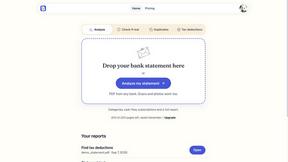
Free AI bank statement analyzer: upload a PDF to see spending by category, income vs expenses and subscriptions.
StatementConverterAI
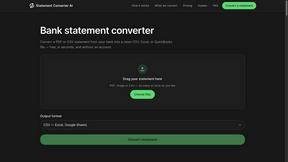
Turn bank statement PDFs and CSVs into clean CSV, Excel or QuickBooks files, no account needed.