StockFit API
StockFit API delivers standardized, model-ready financial data from SEC filings, eliminating taxonomy drift for accurate valuation and backtesting.
Visit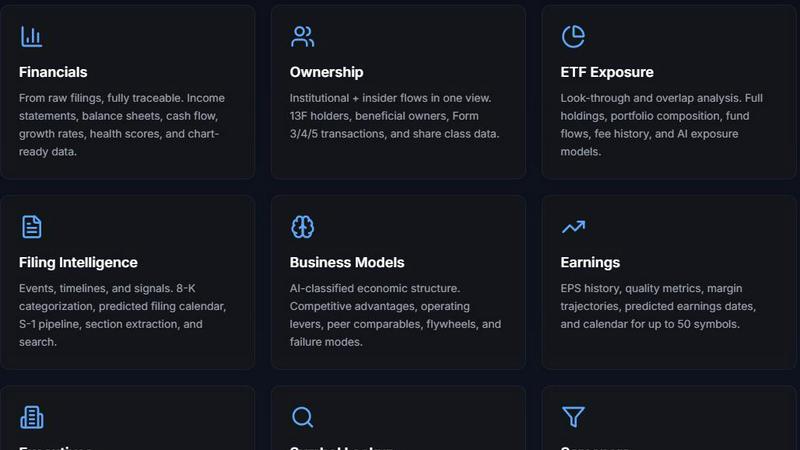
About StockFit API
StockFit API is a financial data platform built specifically for developers, quants, and research platforms who need direct, reliable access to SEC filing data without the usual compromises. If you have ever tried to build a financial model, run a backtest, or analyze company fundamentals using existing APIs, you have likely run into a frustrating choice: pay for cheap tiers that deliver inaccurate or incomplete data, or sign expensive enterprise contracts that drain your startup budget. StockFit fills that gap completely. The platform pulls financial data directly from SEC XBRL filings, meaning there is no derived middle layer and every single number is traceable back to its original filing. This gives you confidence that what you are modeling is accurate and auditable. StockFit covers fundamentals, ownership data, ETF and mutual fund exposure, insider transactions, and all types of filings. It handles complexities that other APIs ignore, such as amended filings, non-December fiscal years, and Q4 reconstructions from 10-K and 10-Q data. Beyond raw numbers, StockFit provides rich economic models per company including offerings, peers, operating levers, competitive advantages, flywheels, strategic initiatives, and failure modes. For ETF and mutual fund exposure, the platform models mandate, portfolio construction, costs, sensitivities, and use cases in an AI-friendly format perfect for LLM workflows. With over 250 million facts, 5 million filings, and daily updates, StockFit is built for serious financial analysis. The API delivers standardized financials, sector-aware metrics, and source-cited economic models that are structured specifically for valuation and backtesting workflows.
Features of StockFit API
Direct SEC XBRL Data with Full Audit Trail
StockFit pulls financial data directly from SEC XBRL filings, eliminating any derived middle layer that can introduce errors or inaccuracies. Every single number returned by the API is traceable back to its original filing through a comprehensive source citation system. The API response includes a sources object that maps each financial fact to the specific filing accession number, allowing you to verify and audit any data point. This feature is critical for financial professionals who need to ensure the integrity of their models and cannot afford to rely on black-box data sources that may contain undisclosed adjustments or errors.
Standardized Financials with No Taxonomy Drift
The API automatically normalizes financial data across different reporting standards, fiscal years, and company-specific accounting practices. StockFit handles complexities such as amended filings, companies with non-December fiscal year ends, and Q4 reconstructions from 10-K and 10-Q data. The output provides a consistent, model-ready format with standardized fact names like revenue, grossProfit, operatingIncome, and netIncome. This eliminates the need for developers to write custom parsers for each company's unique reporting style or to manually reconcile data across different filing periods. The standardization is maintained even as SEC taxonomies evolve over time.
Comprehensive Economic Models for Companies
Beyond raw financial numbers, StockFit provides rich economic models per company that include detailed analysis of offerings, peer comparisons, operating levers, competitive advantages, flywheels, strategic initiatives, and failure modes. These models are structured in an AI-friendly format that is perfect for LLM workflows and advanced analytical applications. For example, the platform can identify a company's key competitive advantages, the strategic initiatives it is pursuing, and the potential failure modes that investors should monitor. This contextual layer transforms raw data into actionable business intelligence that supports deeper financial analysis and investment research.
ETF and Mutual Fund Exposure Modeling
StockFit models ETF and mutual fund exposure with an unprecedented level of detail that goes far beyond simple holdings lists. For each fund, the API provides insights into the fund's mandate, portfolio construction methodology, cost structure, factor sensitivities, and recommended use cases. This information is presented in a structured, AI-friendly format that enables sophisticated portfolio analysis, risk assessment, and asset allocation decisions. The exposure data helps users understand not just what a fund holds, but why it holds those positions and how the fund is likely to behave under different market conditions.
Use Cases of StockFit API
Quantitative Backtesting and Financial Modeling
Quantitative analysts and algorithmic traders can use StockFit to build and backtest financial models with data they can trust. The standardized financials and direct SEC sourcing eliminate the data quality issues that commonly plague backtesting efforts. For example, a quant building a value factor model can pull standardized income statement data for thousands of companies, knowing that each revenue and earnings figure is directly traceable to the original SEC filing. The API's handling of complex scenarios like amended filings and non-standard fiscal years ensures that backtests are based on accurate historical data, not approximations or interpolations that would introduce bias into the results.
Fundamental Equity Research and Valuation
Equity researchers and investment analysts can leverage StockFit to conduct deep fundamental analysis of individual companies. The platform provides not only the raw financial data needed for DCF models and ratio analysis, but also the economic models that give context to the numbers. An analyst researching a technology company can access standardized income statements, balance sheets, and cash flow statements, while also reviewing the company's competitive advantages, operating levers, and strategic initiatives. The sector-aware metrics ensure that comparisons between companies in the same industry are meaningful and accurate.
ETF and Mutual Fund Due Diligence
Asset allocators and financial advisors can use StockFit's fund exposure modeling to conduct thorough due diligence on ETFs and mutual funds before making investment recommendations. The platform provides detailed information on each fund's mandate, portfolio construction process, cost structure, and factor sensitivities. This allows advisors to determine whether a fund truly aligns with an investor's goals and risk tolerance. For example, an advisor can assess whether a low-cost index fund actually provides the market exposure it claims, or whether an actively managed fund's higher fees are justified by a differentiated investment approach.
AI-Powered Financial Analysis and LLM Workflows
Developers building AI-powered financial tools and applications can use StockFit's structured, AI-friendly data format to feed large language models and other machine learning systems. The economic models, sector-aware metrics, and standardized financials are designed to be consumed programmatically, enabling applications that can answer complex financial questions, generate investment research reports, or provide real-time financial analysis. The API's daily updates ensure that AI systems always have access to the most current financial data, while the source citations allow AI outputs to be verified against original SEC filings.
Frequently Asked Questions
How does StockFit ensure the accuracy of its financial data?
StockFit pulls financial data directly from SEC XBRL filings, which are the official, audited financial statements that companies submit to the Securities and Exchange Commission. There is no derived middle layer or third-party processing that could introduce errors. Each data point in the API response includes source citations that map back to the specific filing accession number, allowing you to verify any number against the original SEC document. This direct sourcing model provides the highest possible level of data integrity and auditability.
What types of financial data does StockFit cover?
StockFit covers a comprehensive range of financial data including fundamentals (income statements, balance sheets, cash flow statements), ownership data, ETF and mutual fund exposure, insider transactions, and all types of SEC filings. The platform handles over 250 million facts from more than 5 million filings. Beyond raw numbers, StockFit also provides rich economic models per company that include offerings, peers, operating levers, competitive advantages, flywheels, strategic initiatives, and failure modes. For funds, the platform models mandate, portfolio construction, costs, sensitivities, and use cases.
How does StockFit handle complex filing scenarios like amended filings and non-December fiscal years?
StockFit is specifically designed to handle the complexities that other financial data APIs ignore. For amended filings, the platform tracks the most current version while also maintaining a historical record of amendments. For companies with non-December fiscal years, StockFit automatically normalizes the data to ensure consistent period comparisons. The API also reconstructs Q4 data from 10-K and 10-Q filings, providing complete quarterly data even when companies report differently. This comprehensive handling ensures that your models are based on accurate, properly structured data regardless of a company's reporting practices.
How often is the data updated and how many companies are covered?
StockFit receives daily updates to ensure users always have access to the most current financial data. The platform covers a broad universe of publicly traded companies that file with the SEC, including large-cap, mid-cap, and small-cap stocks across all sectors and industries. With over 250 million facts and 5 million filings in its database, StockFit provides extensive historical data depth that supports both current analysis and long-term backtesting. The daily update cadence means that when a company files a new 10-Q or 10-K, the data is available in the API shortly after the filing is submitted to the SEC.
Explore more in this category:
Similar to StockFit API


Hishab
All-in-one POS, inventory, accounting and HR software for Bangladeshi SMEs — real-time sales, stock and finance in one place.
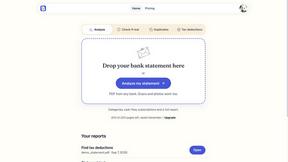
MyBankStatementAnalysis
Free AI bank statement analyzer: upload a PDF to see spending by category, income vs expenses and subscriptions.
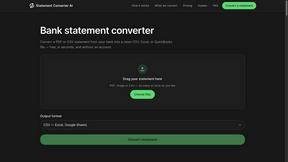
StatementConverterAI
Turn bank statement PDFs and CSVs into clean CSV, Excel or QuickBooks files, no account needed.