
Frizzle
Frizzle uses AI to read handwritten math work in real time, providing teachers with granular analytics on student understanding and misconceptions.
Visit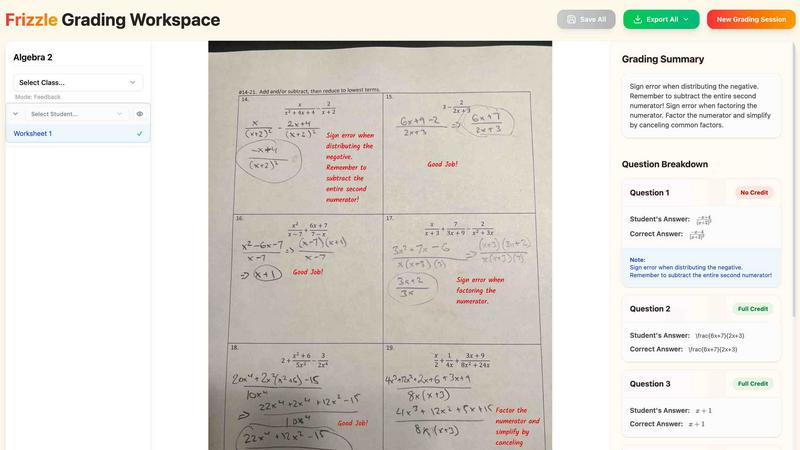
About Frizzle
Frizzle is an AI-powered platform designed to transform how K-12 math classrooms operate by using computer vision and large language models to read, analyze, and grade handwritten student work. The product addresses a fundamental pain point for math teachers: the 10 to 15 hours per week spent manually grading papers. Instead of requiring students to change their workflow and adopt tablets or logins, Frizzle lets students continue writing on paper. Teachers simply photograph a stack of completed assignments using a phone, document camera, or scanner, and Frizzle processes every page automatically. Within approximately eight minutes per class, the system returns detailed, standards-level formative analytics. It does not just mark answers correct or incorrect; it reads every step of the student's work, recognizes multiple valid solution paths, and identifies specific misconceptions. The platform links each page to the correct student automatically and provides live dashboards for teachers, coaches, and district administrators. Frizzle is built for individual teachers seeking to reclaim their evenings, for school coaches who want specific standards-level conversations instead of generic ones, and for districts aiming to reduce math screen time without losing the granular data needed to improve instruction. The system is live in over 30 schools and districts, including a college math pilot at Vanderbilt University and Arizona State University. It has graded over 100,000 questions and is used by more than 2,400 teachers. Frizzle is fully compliant with FERPA and COPPA regulations, ensures student work never trains its models, and maintains AES-256 encryption at rest with TLS in transit.
Features of Frizzle
Handwriting Recognition and Step-Level Analysis
Frizzle uses advanced computer vision to parse handwritten work from any student, whether the writing is print, cursive, scribbled, or sideways. Unlike simple answer-checking tools, Frizzle reads every step of the solution process. It understands multiple solution paths simultaneously, meaning if three students solve a problem three different ways, all three receive appropriate credit. The system provides step-level feedback, pinpointing exactly where a student's thinking went off track rather than simply marking the answer wrong. This granular analysis allows teachers to see partial credit and understand the reasoning behind each student's approach.
Misconception Detection and Mapping
Frizzle's model was trained on 1.4 million pages of real K-12 student work, enabling it to recognize the messy, partial, and creative ways that actual students arrive at answers. The system identifies 147 named misconceptions across K-12 mathematics, each mapped to specific Common Core State Standards (CCSS) and other state frameworks. It also performs prerequisite tracing, meaning it can identify when a 7th-grade error actually stems from a 4th-grade foundational gap. Every flag generated by the system links back to the exact stroke on the student's page, allowing teachers to verify and understand the analysis.
Live Classroom and District Dashboards
After Frizzle processes a stack of papers, it populates live dashboards that show the entire class's performance at a glance. Teachers can see which students are stuck, which misconceptions are spreading across the room, and what concepts need to be retaught the next day. For schools and districts, Frizzle aggregates anonymized data across periods, grades, and buildings. Coaches and administrators can view equity dashboards to spot performance gaps as they emerge, track mastery levels by standard, and evaluate which curricula are actually working. The system is curriculum-agnostic, working with Eureka, Illustrative Math, Saxon, and other programs.
Automatic Student Linking and Class Organization
When a teacher snaps a photo of a stack of papers, Frizzle automatically links every individual page to the correct student and class period. There is no need for students to write names on a specific line or for teachers to manually sort papers. The system ingests classroom photos and organizes the data into the correct class roster within approximately 30 seconds. This seamless integration eliminates administrative overhead and ensures that the data flowing into dashboards is accurate and immediately actionable. Teachers can see a live feed of their class, including scores, flagged papers, and recommended next steps for each student.
Use Cases of Frizzle
Daily Formative Assessment for Individual Teachers
A middle school math teacher with five sections of 28 students each can reclaim 10 to 15 hours of grading time every week. Instead of taking papers home on Sunday, the teacher snaps a photo of each stack after class. Within minutes, Frizzle returns detailed analytics showing which Common Core standards each student has mastered and which misconceptions are prevalent. The teacher can then plan the next day's instruction based on real data, addressing specific gaps before they compound. This transforms grading from a clerical burden into a strategic teaching tool.
School-Wide Instructional Coaching and Professional Development
Math coaches and instructional leads can use Frizzle to move beyond generic classroom observations and have specific, data-driven conversations with teachers. By viewing aggregated dashboards across multiple periods and grade levels, coaches can identify which misconceptions are systemic across a school and which teachers might benefit from targeted support. For example, if a coach sees that sign errors are spiking across all Algebra I sections, they can organize a professional development session specifically focused on that misconception. This level of specificity makes coaching more effective and efficient.
District-Level Curriculum and Equity Analysis
District administrators can use Frizzle's anonymized, aggregated data to evaluate the effectiveness of their math curriculum across multiple schools. The system provides standards-level analytics that show which standards are being mastered and where students are struggling district-wide. Equity dashboards allow administrators to spot performance gaps between different schools, demographic groups, or classrooms as soon as they emerge, rather than waiting for end-of-year assessments. This enables proactive resource allocation, targeted interventions, and data-driven curriculum decisions that improve outcomes for all students.
Reducing Screen Time While Maintaining Data Quality
Districts that are concerned about excessive screen time for students can use Frizzle to maintain a paper-based classroom while still generating the granular data needed for improvement. Students write on paper using pencils, which is often the preferred method for mathematical problem-solving. Teachers collect the physical work and digitize it with a quick photo. This approach eliminates the need for students to use tablets or computers for math practice, reducing digital fatigue, while still providing teachers, coaches, and administrators with real-time, actionable data on student learning.
Frequently Asked Questions
How does Frizzle handle different handwriting styles and messy work?
Frizzle's computer vision model was trained on 1.4 million pages of real K-12 student work, which includes a wide variety of handwriting styles, from neat print to messy cursive and even sideways scribbles. The system is designed to recognize the natural variability of student writing. It understands multiple solution paths and can parse partial or incomplete work. If the system's confidence in a grade is low, it uses a confidence-interval system to flag that paper for human review, ensuring accuracy remains high at 97 percent overall.
Is Frizzle compliant with student privacy regulations like FERPA and COPPA?
Yes, Frizzle is built with privacy as a foundational principle. The platform is fully compliant with FERPA (Family Educational Rights and Privacy Act) and COPPA (Children's Online Privacy Protection Act). Student work never trains the Frizzle model, meaning the data you upload remains yours and is not used to improve the system for other users. Data is encrypted using AES-256 at rest and TLS in transit, and the platform undergoes SOC 2 Type II audits annually to verify its security controls.
Does Frizzle work with any math curriculum or textbook?
Yes, Frizzle is curriculum-agnostic. It works with all major math curricula, including Eureka Math, Illustrative Mathematics, Saxon Math, and many others. The system aligns its analytics to Common Core State Standards (CCSS), TEKS, and over 30 additional state frameworks. Teachers can use Frizzle with any assignment, quiz, or test they create, regardless of the source material. The system reads the handwritten work and maps it to the relevant standards automatically.
How long does it take to process a class set of papers?
The process is very fast. Snapping a photo of a stack of papers takes approximately 30 seconds for a typical class. After the photo is uploaded, Frizzle processes the entire set of papers and returns live dashboards within about eight minutes. The dashboards update live as more papers are processed. This speed allows teachers to get actionable data during the same school day, often before the next class period begins.
Similar to Frizzle
Wordy
Learn languages with real movie and TV show clips.
PDFKing
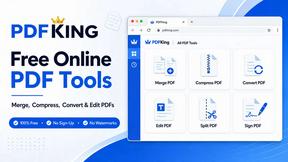
Free online PDF tools to merge, compress, convert, edit, sign, and manage documents—no signup, watermarks, or daily limits.

TchoAI
Turn documents, notes, and data into clear, editable presentations in minutes.
Registrant Prep
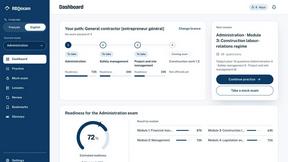
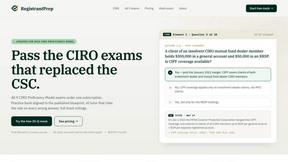
Registrant Prep offers affordable AI-powered CIRO exam prep with rule-cited explanations and personalized mock exams for $29.99 monthly.